Choosing the right hearing aid can be overwhelming. With so many brands, styles, and advanced technologies available today, it’s easy to get confused about which one is best for you.
The truth is that there is no single best hearing aid for everyone. The right hearing aid depends on your hearing loss, lifestyle, budget, and personal preferences. That’s why hearing professionals always recommend a comprehensive hearing evaluation before selecting a device.
In this guide, you’ll learn everything you need to know before buying a hearing aid from the latest features and hearing aid styles to the key factors that can help you make the right decision.
Brand-wise Hearing Aid Price List
Whether you’re looking for an affordable hearing aid or a premium AI-powered model, comparing leading brands can help you make an informed decision. Below are some of the most popular hearing aid brands along with their flagship models and approximate prices based on the latest manufacturer price lists.
| Brand | Popular Model | Key Features | Approx. Price* |
|---|---|---|---|
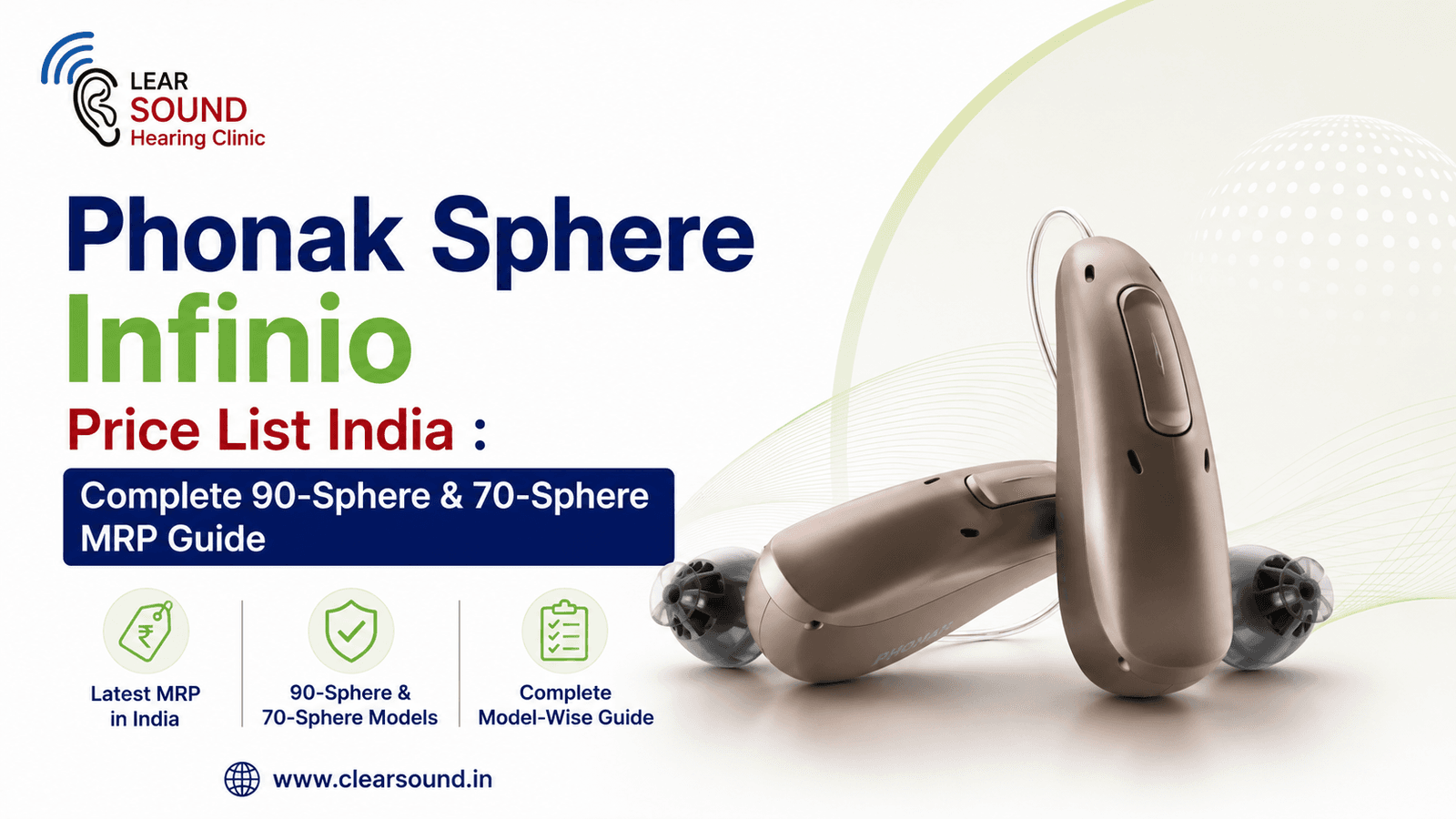
| Phonak | Audéo Sphere Infinio I90 | AI Speech Enhancement, Bluetooth, Rechargeable | ₹4,56,500 |
| Signia | Pure Charge&Go BCT IX 7 | RealTime Conversation Enhancement, Bluetooth, Rechargeable | ₹3,29,990 (Pair) |
| Oticon | Intent 1 MiniRITE Power | User Intent Sensors, Deep Neural Network, LE Audio | ₹4,25,000 |
| Widex | Allure 440 RIC | Natural Sound Processing, Rechargeable | ₹4,80,000 |
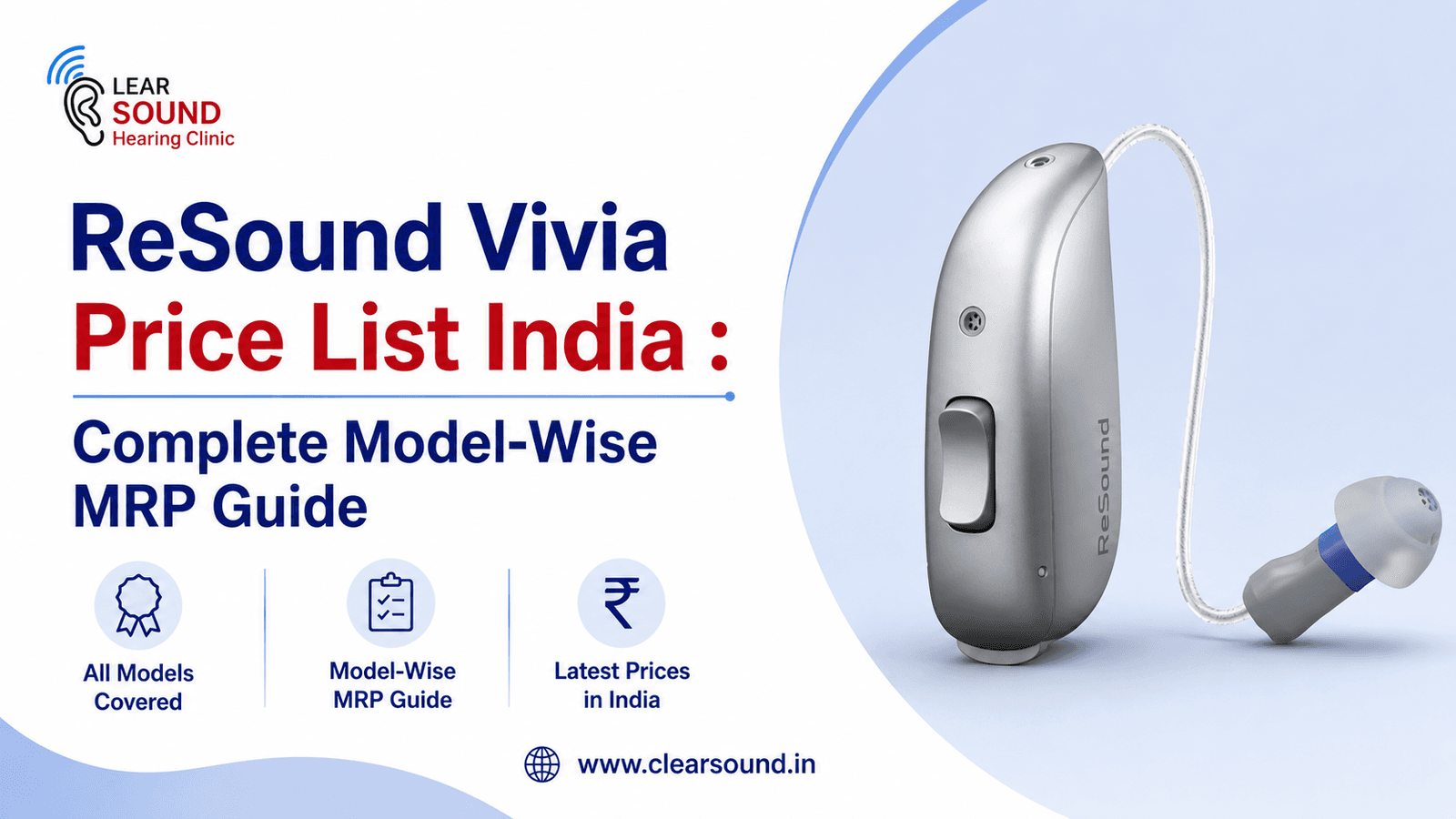
| ReSound | Vivia 9 MicroRIE | Deep Neural Network Chip, Auracast, Rechargeable | ₹4,55,495 |
| Starkey | Genesis AI 24 RIC RT | AI Processor, Health Tracking, Bluetooth | ₹3,90,000 |
Signia Hearing Aid Price List
| Model | Technology | Approx. Price* |
|---|---|---|
| Pure Charge&Go BCT IX 7 | Premium AI | ₹3,29,990 (Pair) |
| Pure Charge&Go IX 5 | Advanced AI | ₹2,59,990 (Pair) |
| Pure Charge&Go IX 3 | Mid-range AI | ₹1,99,990 (Pair) |
*Based on the March 2026 Signia retail price list.
Phonak Hearing Aid Price List
| Model | Technology | Approx. Price* |
|---|---|---|
| Audéo Sphere Infinio I90 | Premium AI | ₹4,56,500 |
| Audéo Infinio I70 | Advanced | ₹3,56,500 |
| Virto Infinio I90 | Invisible Custom | ₹3,27,000 |
*Based on the June 2026 Phonak retail price list.
Oticon Hearing Aid Price List
| Model | Technology | Approx. Price* |
|---|---|---|
| Intent 1 MiniRITE Power | Premium | ₹4,25,000 |
| Intent 2 MiniRITE Power | Advanced | ₹3,90,000 |
| Real 1 MiniRITE | Premium | ₹3,50,000 |
| More 1 MiniRITE | Advanced | ₹1,90,000 |
Prices sourced from the Oticon Product Portfolio (May 2025).
Widex Hearing Aid Price List
| Model | Technology | Approx. Price* |
|---|---|---|
| Allure 440 RIC | Premium AI | ₹4,80,000 |
| SmartRIC 440 | Premium | ₹4,30,000 |
| Moment Sheer 440 | Advanced | ₹3,75,000 |
*Prices based on the January 2026 Widex price list.
ReSound Hearing Aid Price List
| Model | Technology | Approx. Price* |
|---|---|---|
| Vivia 9 MicroRIE | Premium AI | ₹4,55,495 |
| Nexia 9 MicroRIE | Premium | ₹4,55,495 |
| Vivia 7 MicroRIE | Advanced | ₹2,64,495 |
| Nexia 7 MicroRIE | Advanced | ₹2,64,495 |
Prices sourced from the June 2026 ReSound price list.
Starkey Hearing Aid Price List
| Model | Technology | Approx. Price* |
|---|---|---|
| Genesis AI 24 RIC RT | Premium AI | ₹3,90,000 |
| Genesis AI 20 | Advanced | ₹2,90,000 |
| Genesis AI 16 | Mid-range | ₹2,10,000 |
Why Choosing the Right Hearing Aid Matters
A hearing aid isn’t simply a sound amplifier. Modern hearing aids use advanced digital technology and artificial intelligence to improve speech clarity, reduce background noise, and provide a more natural listening experience.
Choosing the wrong hearing aid may result in:
- Poor speech understanding
- Uncomfortable fitting
- Difficulty hearing in noisy places
- Short battery life
- Limited connectivity
- Low satisfaction
Choosing the right hearing aid ensures better hearing, greater comfort, and improved quality of life.
Modern Hearing Aid Features You Should Know
Today’s premium hearing aids are packed with smart features designed to make everyday listening easier.
Bluetooth Connectivity

Bluetooth hearing aids connect directly with:
- Smartphones
- Smart TVs
- Tablets
- Laptops
Benefits include:
- Hands-free phone calls
- Music streaming
- Video streaming
- Better TV listening
Rechargeable Batteries

Rechargeable hearing aids eliminate the hassle of replacing disposable batteries.
Benefits include:
- All-day battery life
- Easy overnight charging
- Lower maintenance
- Eco-friendly solution
AI-Powered Sound Processing
Artificial Intelligence automatically adjusts hearing settings based on your surroundings.
AI helps with:
- Speech enhancement
- Noise reduction
- Automatic environment detection
- Personalized listening
Directional Microphones
These microphones focus on speech while reducing unwanted background sounds.
Perfect for:
- Restaurants
- Family gatherings
- Meetings
- Outdoor environments
Tinnitus Relief
Many premium hearing aids include tinnitus management features.
They can:
- Reduce ringing sounds
- Provide soothing masking sounds
- Improve concentration
- Support better sleep
Water & Dust Resistance
Modern hearing aids often come with IP68 protection.
This protects against:
- Sweat
- Rain
- Dust
- Everyday moisture
Hearing Aid Styles Comparison
| Style | Visibility | Suitable For | Best Feature |
|---|---|---|---|
| BTE (Behind-the-Ear) | Visible | Mild to Profound | Powerful & Easy to Handle |
| RIC (Receiver-in-Canal) | Low Visibility | Mild to Severe | Natural Sound & Comfortable |
| ITE (In-the-Ear) | Moderate | Mild to Severe | Custom Fit |
| ITC (In-the-Canal) | Less Visible | Mild to Moderate | Compact Design |
| CIC (Completely-in-Canal) | Very Discreet | Mild to Moderate | Nearly Invisible |
| IIC (Invisible-in-Canal) | Invisible | Mild to Moderate | Maximum Cosmetic Appeal |
7 Factors to Consider Before Buying a Hearing Aid
1. Your Hearing Loss
A professional hearing test determines:
- Mild hearing loss (26–40 dB)
- Moderate hearing loss (41–70 dB)
- Severe hearing loss (71–90 dB)
- Profound hearing loss (90+ dB)
Different hearing losses require different hearing aid technologies.
2. Your Lifestyle
Ask yourself:
- Do you attend meetings?
- Do you travel frequently?
- Do you enjoy music?
- Do you spend time in noisy places?
The answers help determine which hearing aid features are most useful.
3. Comfort & Fit
Your hearing aid should feel comfortable throughout the day.
Custom hearing aids fit inside the ear, while RIC and BTE styles sit comfortably behind the ear.
Proper fitting by an audiologist is essential.
4. Technology Level
Premium hearing aids usually include:
- AI
- Bluetooth
- Rechargeable batteries
- Directional microphones
- Automatic programs
- Fall detection
- Health tracking
Basic models provide fewer automatic features but remain effective for many users.
5. Budget
Hearing aid prices vary depending on:
- Brand
- Technology level
- Rechargeability
- Bluetooth support
- AI features
Choose a hearing aid that balances performance and affordability.
6. Trial Period & After-Sales Service
Before purchasing, check whether the provider offers:
- Free hearing aid trial
- Fine-tuning sessions
- Warranty
- Repair support
- Programming adjustments
These services are just as important as the hearing aid itself.
7. Choose the Right Hearing Care Provider
A good hearing aid provider should never recommend a device without first performing a detailed hearing evaluation.
Look for providers who offer:
- Comprehensive hearing tests
- Qualified audiologists
- Multiple hearing aid brands
- Personalized fitting
- Follow-up care
- Ongoing support
Best Hearing Aid Features Based on Lifestyle
| Lifestyle | Recommended Features |
|---|---|
| Working Professionals | Bluetooth, AI Noise Reduction, Rechargeable |
| Seniors | Rechargeable, Automatic Programs, Large Controls |
| Frequent Travelers | Long Battery Life, Bluetooth Streaming |
| Music Lovers | Natural Sound Processing |
| Outdoor Users | Wind Noise Reduction, Water Resistance |
| Tinnitus Patients | Built-in Tinnitus Therapy |
Which Hearing Aid Is Best for You?
| Hearing Need | Recommended Style |
|---|---|
| Mild Hearing Loss | CIC, IIC, RIC |
| Moderate Hearing Loss | RIC, BTE |
| Severe Hearing Loss | Power BTE |
| Invisible Hearing Aid | IIC, CIC |
| Bluetooth Streaming | RIC |
| Rechargeable | RIC, BTE |
| Active Lifestyle | Rechargeable RIC |
Expert Tips Before Buying a Hearing Aid
- Never buy a hearing aid without a professional hearing test.
- Choose a hearing aid based on your hearing loss, not just the brand.
- Compare different styles and technologies.
- Ask about warranty and service plans.
- Take advantage of a trial period before making your final decision.
Frequently Asked Questions (FAQ)

How do I know which hearing aid is right for me?
The best hearing aid depends on your hearing loss, lifestyle, communication needs, and budget. A professional hearing evaluation is the first step.
Which hearing aid style is the most comfortable?
Receiver-in-Canal (RIC) hearing aids are generally considered the most comfortable because they are lightweight, discreet, and suitable for many types of hearing loss.
Should I choose rechargeable or battery-powered hearing aids?
Rechargeable hearing aids are more convenient, environmentally friendly, and eliminate the need for frequent battery replacements.
Are Bluetooth hearing aids worth it?
Yes. Bluetooth hearing aids allow direct streaming from smartphones, TVs, and other compatible devices, improving convenience and sound quality.
How much do hearing aids cost?
Prices vary depending on the brand, technology, and features. Basic models are more affordable, while premium AI-powered hearing aids offer advanced functionality at a higher price.
Can I buy a hearing aid without a hearing test?
It’s not recommended. A hearing test helps identify the type and severity of hearing loss, ensuring you receive the most appropriate hearing aid.
How long do hearing aids last?
With proper care and regular maintenance, most hearing aids last 5 to 7 years, although battery life and performance can vary by model.